Real Collegio Ferdinandeo

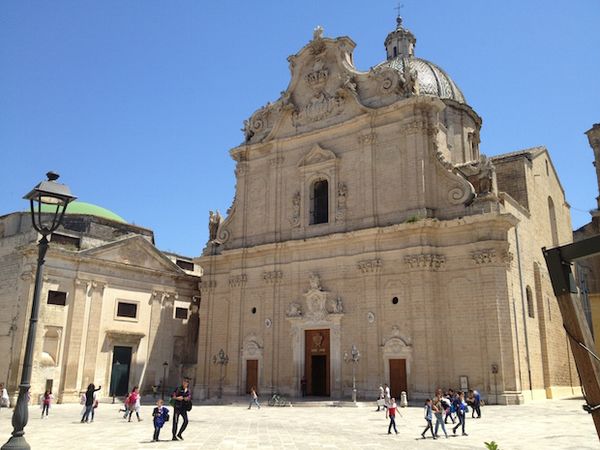
The Real Collegio Ferdinandeo in Francavilla Fontana, also known as the former Collegio delle Scuole Pie, is today the seat of the Scuola Media Vitaliano Bilotta. It is an important institution dedicated to the education of aristocrats, a symbol of high quality and profound cultural value. The educational and intellectual prestige of this institution was enhanced by the title of "Real Collegio Ferdinandeo" on 6 July 1841.
Its majestic architecture, with essential and elegant lines, is built on a quadrangular plan and is two storeys high. Together with the adjacent church of San Sebastiano, the whole complex occupies the entire block between Via Simeana and Via Crispi, an imposing testimony to the history of Francavilla Fontana. The large round arch of the entrance portal, with ashlar jambs, is surmounted by the stone coats of arms of those who contributed most to the design of the College: the Imperiali and Grimaldi families, the Order of the Scolopi and the town of Francavilla itself. Inside, the iconic U-shaped staircase leads to the long barrel vaulted corridor that connects the many rooms of the building.
Its history in aristocratic education shows how the elite of the time prepared for a leading role in society. The learning environment of the College was one of excellence, offering a comprehensive and in-depth education in a range of subjects from the humanities to the arts.
The college was housed in a large convent complex, including the magnificent church of St. Sebastian (13th century), founded by the revolutionary Padri delle Scuole Pie, known as the Scolopians. This congregation arrived in Francavilla around the middle of the 17th century, bringing with them the radical renewal of a more democratic and egalitarian nature desired by the Catholic Church in response to the turmoil of the recent Protestant Reformation.
Many prominent personalities actively contributed to the creation of the College, in particular Don Andrea Imperiali, the second Prince of Francavilla, who was followed by his brother Giuseppe Renato Imperiali, the future Cardinal of the Apostolic Chamber. His patrimonial contribution led to the final approval of the project in 1681, in agreement with the University and the Apostolic See.
Other illustrious figures in the history of the College are Blessed Pompilio M. Pirrotta and Blessed Bartolo Longo.
Exploring the Real Collegio Ferdinandeo allows us to understand how the aristocracy of the time saw education as the foundation of their role in culture and politics, leaving us a precious legacy of their intellectual heritage.