Imperiali Palace

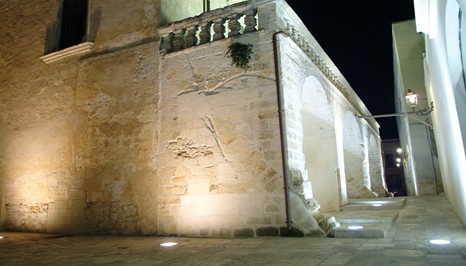
One of the most striking monuments in Latiano is the Palazzo Imperiali, also known as the "Castle" for its original architecture, which appeared as a fortress surrounded by a moat and was built in the 12th century, at the height of the medieval era.
Although little remains of its fortress-like structure, the imposing iconic building still dominates the historic centre of the town, showing its acquired identity as a noble palace, which, after a series of changes of ownership and transformations from a feudal estate to a fortified residence, became the property of the Imperiali family in the mid-1600s, to whom we owe the decisive expansion and restoration of the noble residence that we can admire today.
Its sober and elegant appearance preserves the austere character of its feudal origins, softened by cornices, architectural and decorative details with Baroque elements that give the whole an atmosphere of power and hospitality, in keeping with its recent role as a representation and symbol of Latium.
The façade is characterised by a protruding balcony with Baroque columns, on which the door to the piano nobile stands, framing the entrance portal with the coat of arms of the Imperiali family and decorative ashlar pilasters below. An interesting detail is the wall arch above the large balcony, engraved with Latin verses from Virgilian poems.
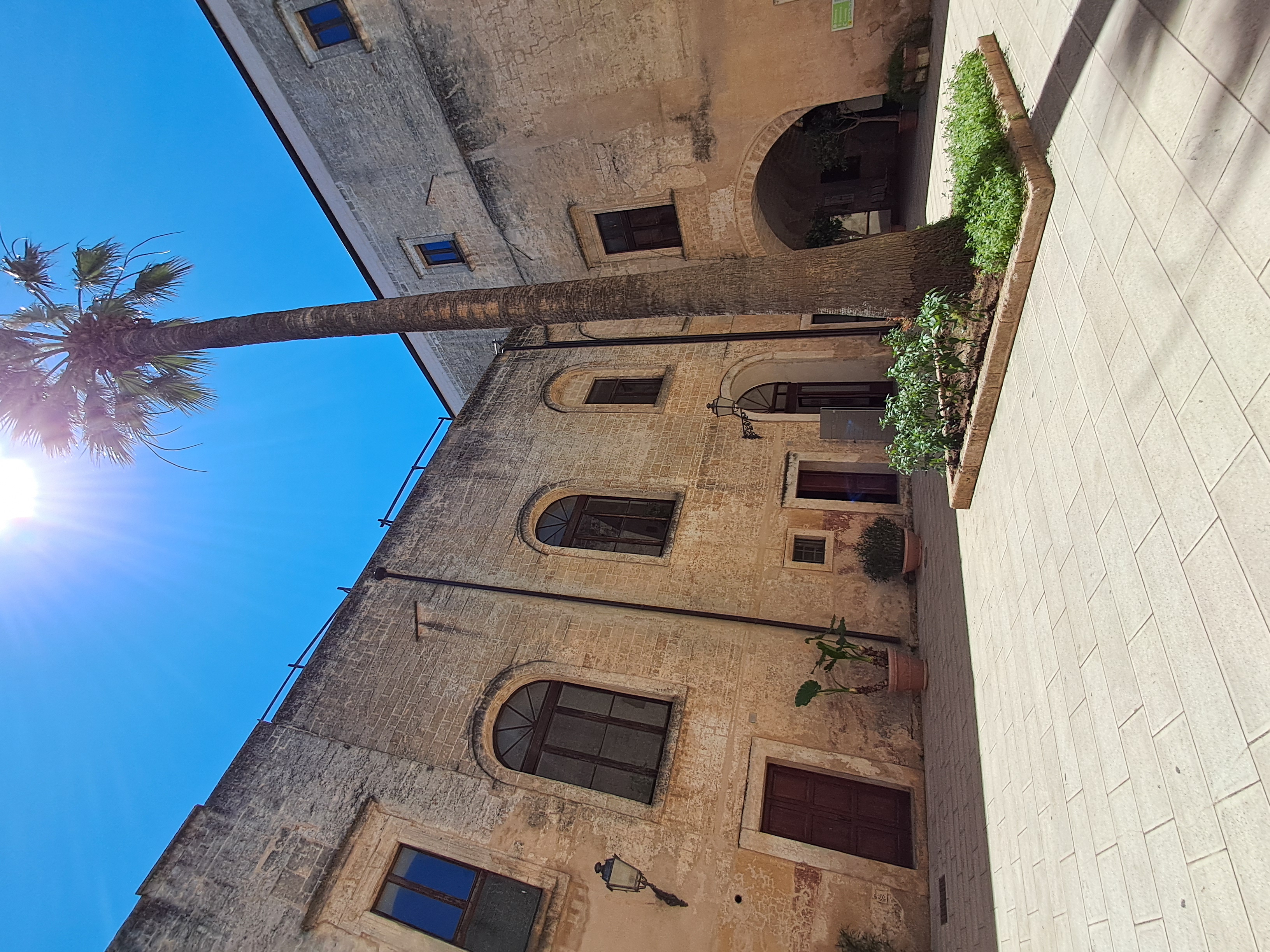
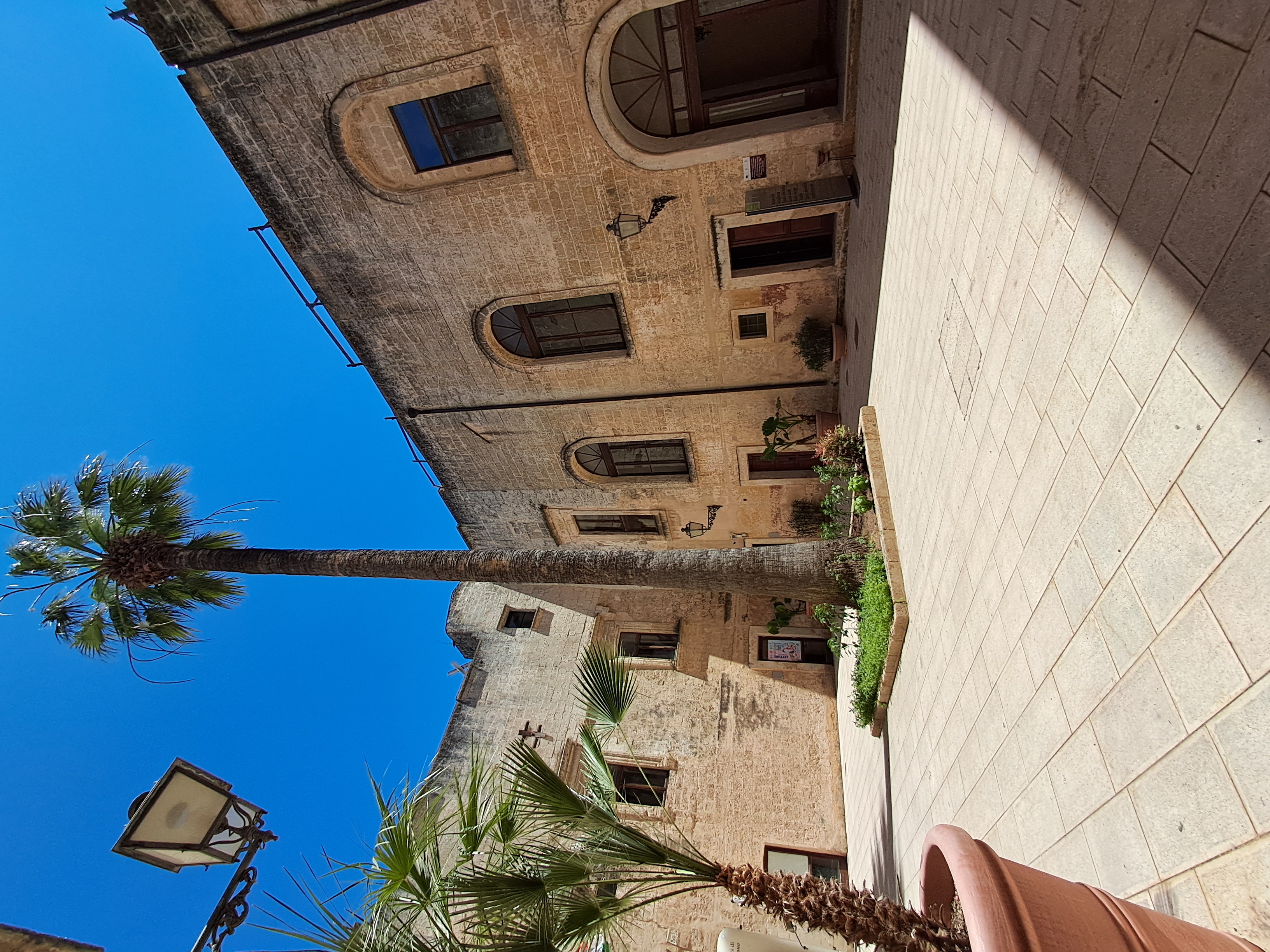
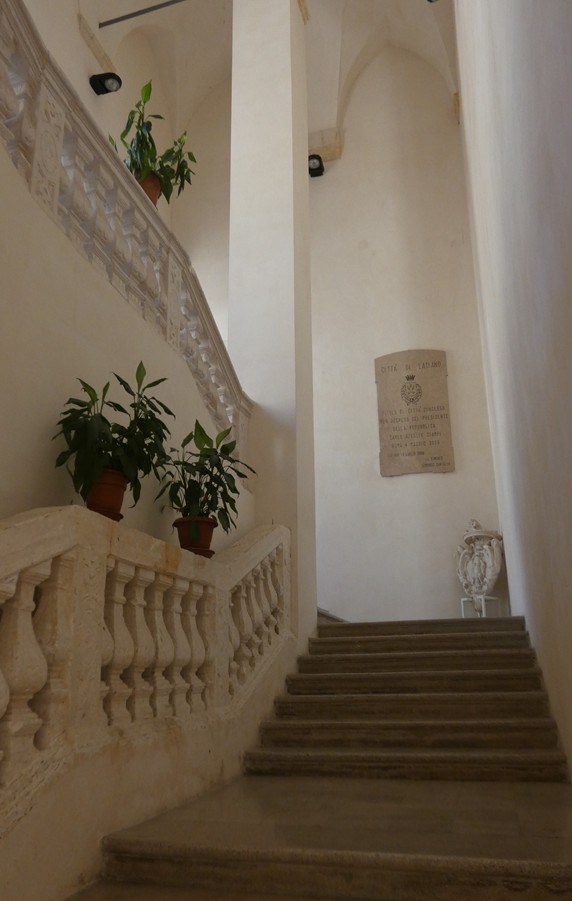
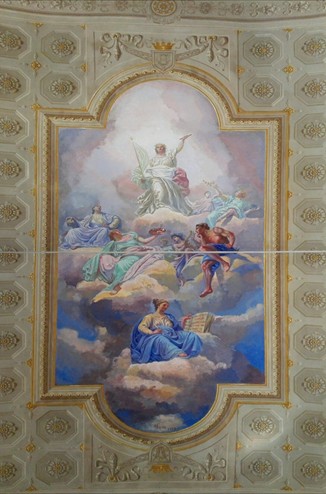
The square plan and the clear arrangement of the windows on the façade highlight the interior spaces, which are divided into two floors (originally there were three) connected by elegant and airy staircases: the ground floor, where the storerooms and rooms for domestic activities were located, and the piano nobile, the lords' residence, whose rooms overlook the central courtyard. In 1909, the palace passed to the Municipality of Latiano, and today it houses the De Nitto Municipal Library, the Imperial Picture Gallery and several exhibition rooms, including the large reception hall, beautifully decorated in 1928 by the Latian painter Agesilao Flora.