Church of Santa Maria in Betlem

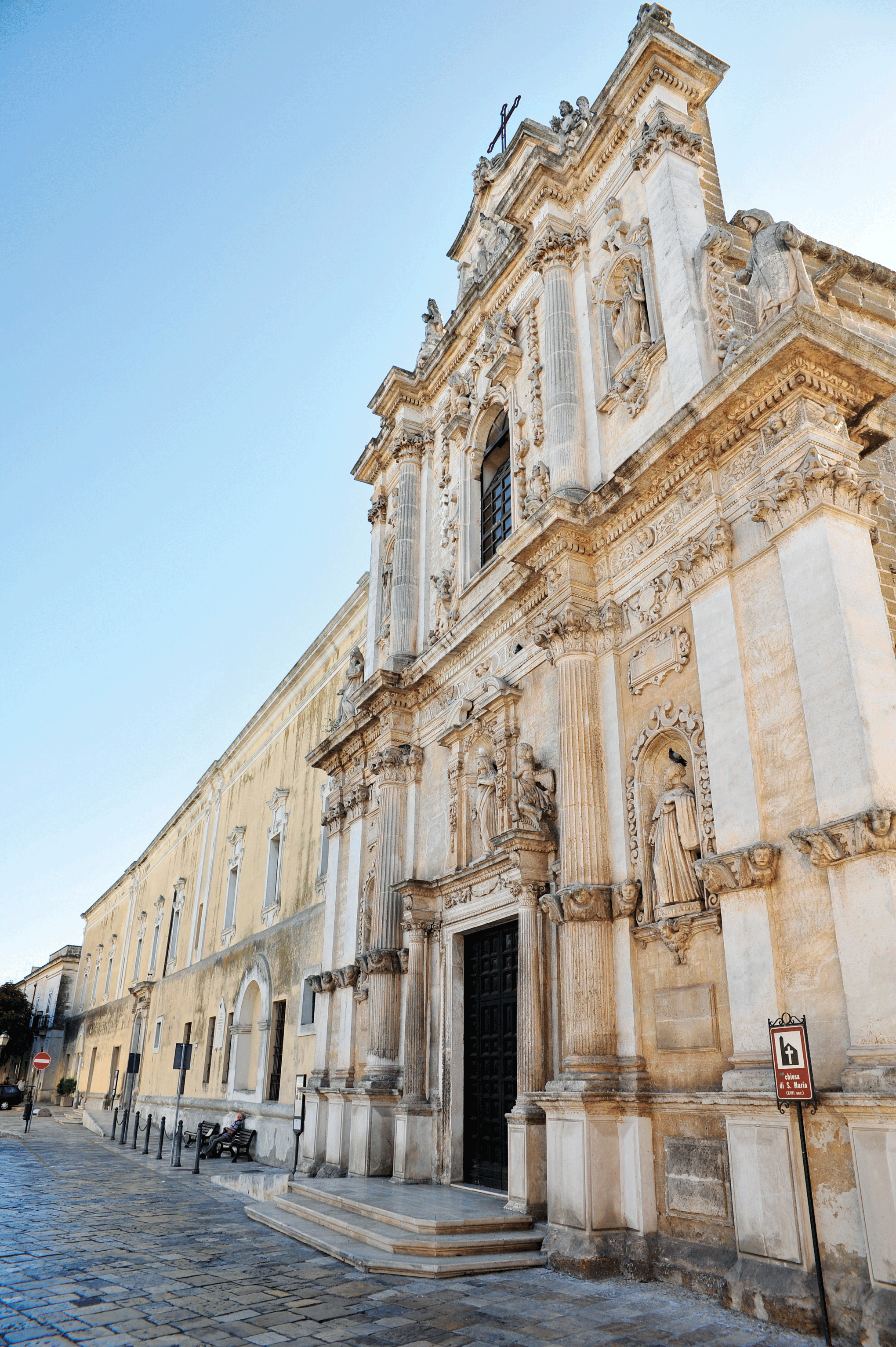
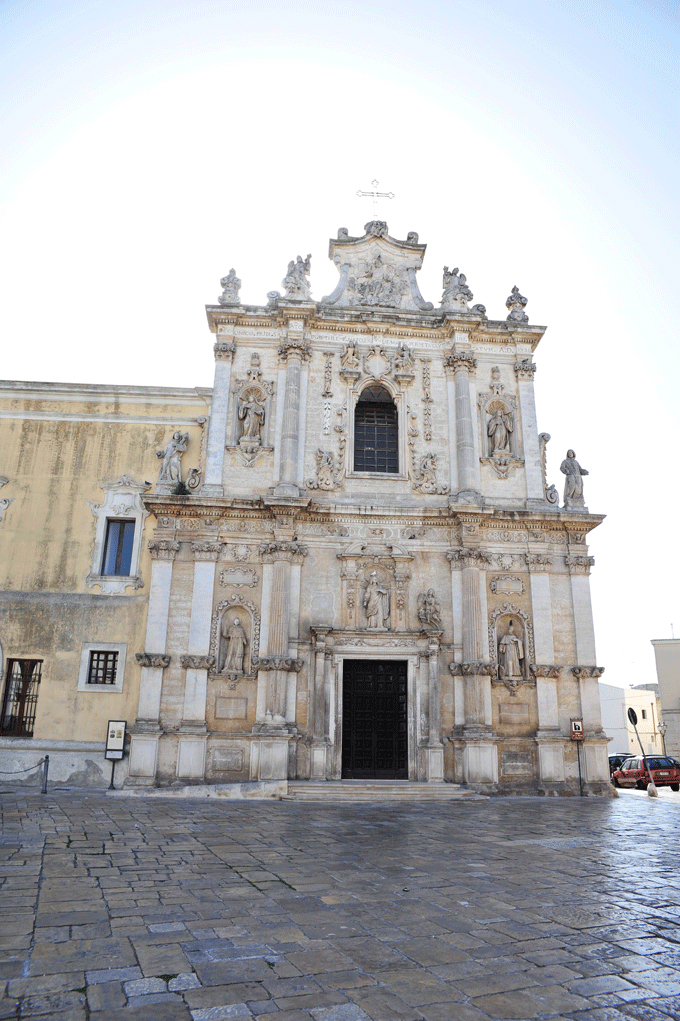
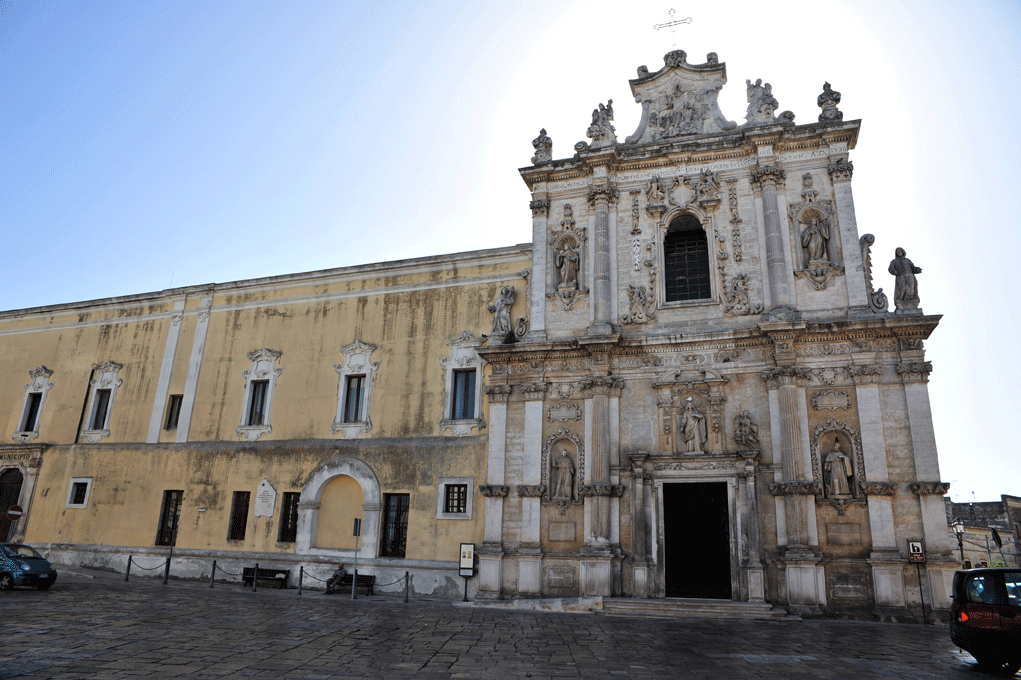
Just outside the walls of the historical centre of Mesagne, through the Porta Piccola, stands the splendid Church of Santa Maria in Betlem, a beautiful example of the expressiveness of Apulian Baroque architecture that is well worth a visit.
The church was built on the foundations of a pagan temple (1528), which housed the image of St. Mary of Bethlehem, still visible on the third altar on the left of the entrance. To whom the people of Mesano attributed the deliverance from the plague and to whom the building was constructed.
In 1608, after years of neglect, the church passed into the hands of the Celestine Fathers, who, seeing the ruinous state of the building, had it rebuilt from the ground up according to the project of the architect Francesco Capodieci, the author of the Chiesa Matrice, and transformed it into the Baroque jewel it is today. In addition to the reconstruction, other valuable works were added in the early 1700s to enrich the building, following a new extension of the entire Celestine complex. These include the statues on the façade and the side altars inside, probably the work of the Lecce master sculptors and architects Pasquale and Domenico Antonio Simone.
Today the façade of the church is a splendid canvas of Baroque elements, where columns and pilasters of different orders alternate with niches and architraves inhabited by statues of saints. The aedicule, which houses the statue of the Virgin of Health, rests on the large entrance portal, which is clearly reminiscent of that of the Matrice Church.
The interior, enriched with stuccoes and decorations typical of the Neapolitan school, has a single nave with chapels dedicated to various saints, containing precious altars and works of art, and ends in the presbytery, characterised by the presence of a majestic triumphal arch and the lowered ceiling of the frescoed vault.
Among the numerous works of art, the high altar with its polychrome marble, the two large paintings in the presbytery and the magnificent organ above the entrance, which is housed in a finely inlaid wooden case, deserve special mention.